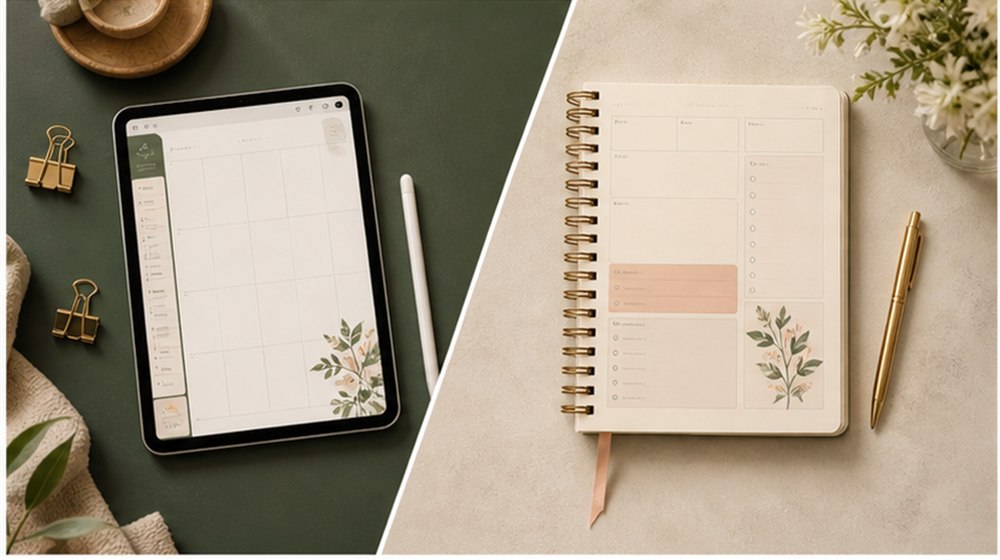
Quick answer: Choose digital if you want flexibility, easy corrections, and a portable archive. Choose paper if you want fewer distractions, a tactile creative process, and a physical keepsake. Many people land on a hybrid: design digitally, then print only what they need. Digital and paper planners are solving the exact same problem — giving shape to your days — but they do it in almost opposite ways. The "best" one isn't a productivity trend; it's the one that matches how you naturally think, plan, and create.
Choose Digital for Flexibility
A digital planner is easy to duplicate, search, and carry everywhere your tablet goes. It suits people who already reach for a screen throughout the day, love a reusable sticker collection they never have to re-buy, and want an archive of past weeks without a shelf full of notebooks.
- Unlimited page duplication
- Easy corrections and rearranging
- Portable, searchable access
- Reusable digital sticker collections
Choose Paper for Focus and Memory
Paper strips away notifications entirely. There's a tactile pause built into picking up a pen that a screen doesn't offer, and handwriting itself can make planning feel more deliberate — less like managing a task list, more like a small daily ritual. A finished paper planner also becomes something different from a digital file: a physical object you can hold, flip through, and keep on a shelf as a record of a season of your life.
- Fewer digital distractions
- A genuinely tactile, creative process
- Nothing to set up — just begin
- A physical keepsake, not a file
The Hybrid Option: Best of Both
You don't have to choose permanently. Many creative planners design and rearrange their layouts digitally — testing colors, moving stickers, trying a new grid — then export only the pages they actually want. Print a weekly booklet for the desk, keep reference pages on a tablet for travel, or order a bound copy once a layout has proven itself worth keeping. It's the low-risk way to test a design before committing it to paper.
Building Products for Both Audiences
If you're designing planners to sell rather than just to use, this same digital-vs-paper divide is worth building into your product line from day one. Digital-only buyers want files optimized for tablet apps; paper-first buyers want clean print margins and PDF-ready layouts. A collection that clearly labels which pages work for which audience — or offers both formats — tends to convert better than a single generic bundle.
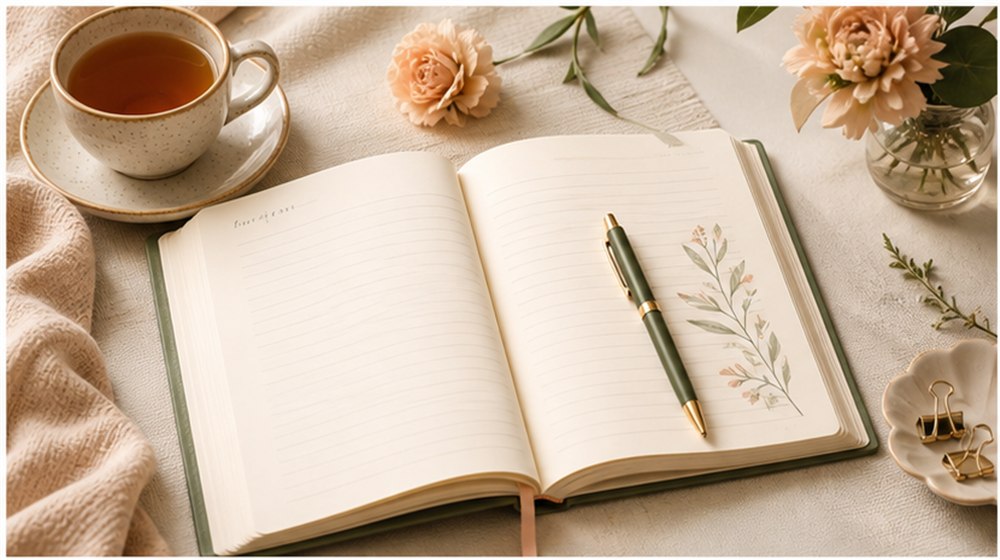 How to Start a Gratitude Journal (and Actually Keep It Going)
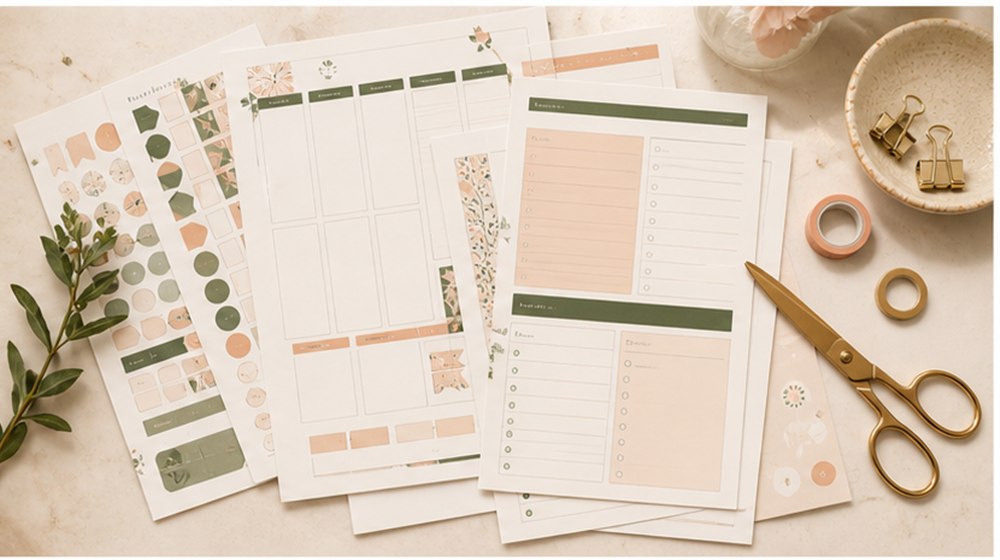 12 Free Printable Planner Ideas for a Calmer Week
 How to Make Money Selling Printables on Etsy