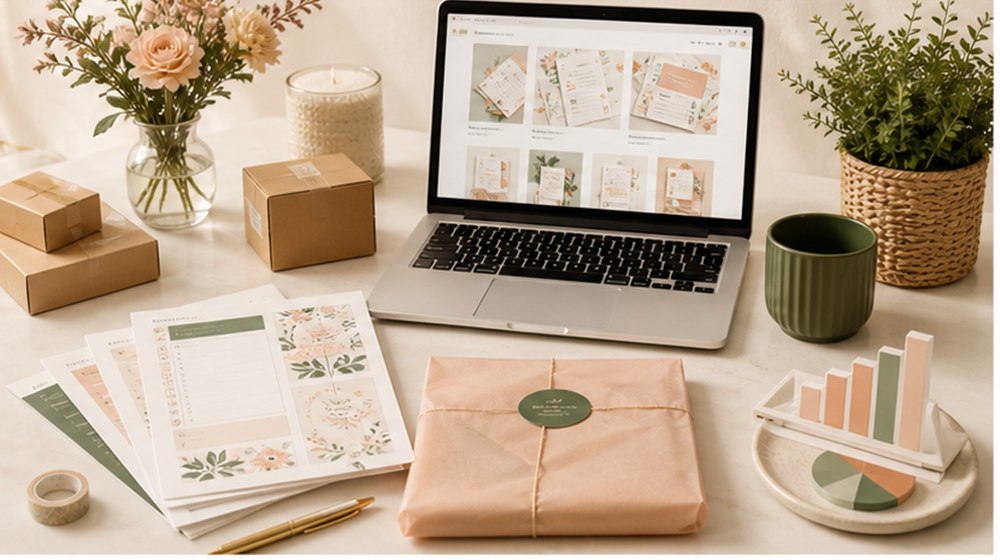
Quick answer: Printable products can become a genuine low-overhead creative business, but the sellers who stick around solve one clear problem for one clear buyer — they don't upload hundreds of generic pages and hope. Start narrow, build a small coordinated collection, and write listings for both search engines and real humans. There's something appealing about a business built entirely from paper you design once and sell forever. No inventory, no shipping boxes, no restocking at 11pm. But "printable planner" alone won't get you very far — the sellers who make this work treat it like a craft, not a lottery ticket.
Pick a Buyer and a Specific Outcome
"Planner printable" is a category, not a product. "Undated homework planner for university students" or "a gentle weekly planner for overwhelmed parents" gives you an actual direction — and, just as importantly, the exact phrases real buyers type into search bars.
A few well-scoped starting niches:
- Study and teacher planners
- Wedding and event organizers
- Budget and savings trackers
- Wellness and gratitude journals
- Small-business planners
Build a Useful Mini Collection
Resist the urge to launch fifty pages at once. Begin with five to twelve coordinated pages that solve one problem well. Include the common paper sizes people expect (A4, US Letter, A5), a simple one-page printing guide, and preview images that show your layout at a size buyers can actually read before purchasing. Test-print every single file yourself before it goes live — a crooked margin is the fastest way to lose a sale and a review.
Price your collection by usefulness and depth, not page count. A focused, well-thought-out system with clear instructions is often worth more to a buyer than a sprawling bundle of repetitive sheets they'll never fully use.
Write Listings for Search — and for Trust
Use a natural key phrase consistently: in your title, the first line of your description, your tags, and your image captions. Be plain about what's included — file formats, sizes, whether the design is editable, and that nothing physical will ship. Buyers who know exactly what they're getting leave better reviews, and better reviews are what actually move you up in Etsy's search results.
One practical note: Etsy's fees, policies, and seller requirements change from time to time, so check Etsy's current seller documentation before finalizing prices or making any income claims in your own marketing.
From Hobbyist to Shop Owner
If you've been designing pages for yourself and keep hearing "I'd buy that" from friends, the jump to selling is smaller than it looks. The same instincts that make a personal gratitude journal or planner feel yours — a considered palette, a clear layout, a small thoughtful detail — are exactly what buyers are paying for. Start with the collection you already wanted for yourself; there's a good chance someone else wants it too.
 How to Start a Gratitude Journal (and Actually Keep It Going)
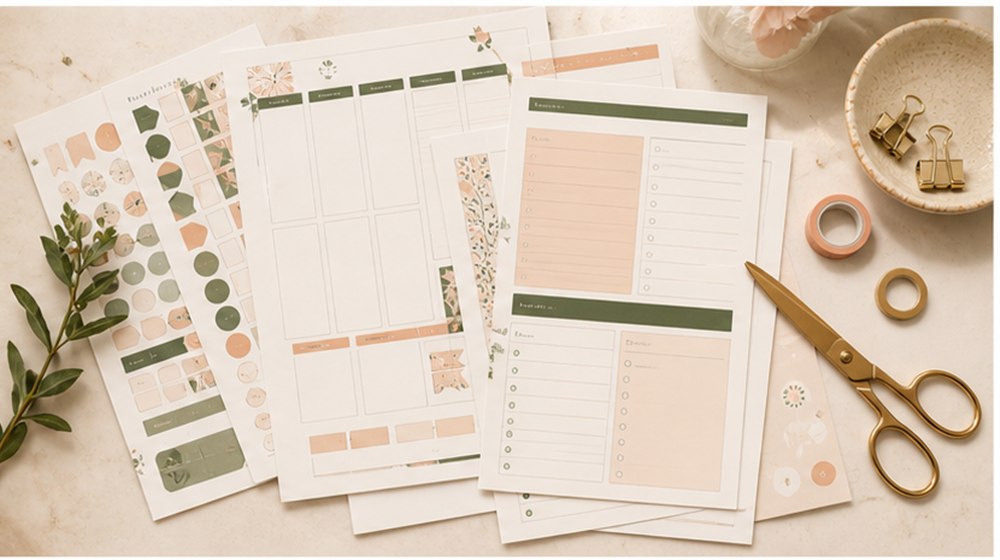 12 Free Printable Planner Ideas for a Calmer Week
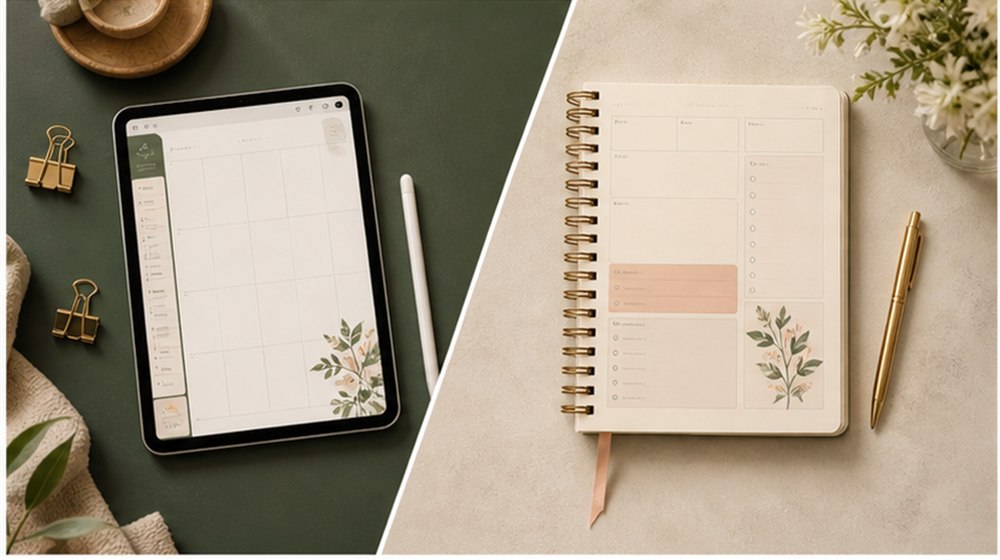 Digital Planner vs Paper Planner: Which One Fits You?