
Quick answer: A good habit tracker makes patterns visible without turning your life into a scorecard. Track fewer things than you're tempted to, match the tracking rhythm to the habit itself, and review the marks with curiosity instead of judgment. A habit tracker is really just a small, honest mirror. It doesn't make you do the thing — it just shows you, in ink, whether you did. The trick is choosing the right few things to track, at the right rhythm, so the page stays a helpful mirror instead of a guilt trip.
Match the Tracker to the Habit
Not every habit belongs on the same timescale. A daily grid works for things you either do or don't do each day — water, medication, stretching. A weekly view suits habits with more natural flexibility, like meal prep or a family phone call. And a monthly tracker fits slower, bigger-picture habits like savings or finishing a book.
Daily habits:
Weekly habits:
Monthly habits:
- Morning sunlight
- Read ten pages
- Stretch or move
- Medication or supplements
- Drink water
- No-spend day
- Meal prep
- Exercise sessions
- Family or friend calls
- Creative practice time
- Savings contribution
- Books finished
- Prayer or meditation streaks
- Big creative projects
- Phone-free evenings
A Handful of Ideas Worth Trying
- Morning sunlight
- Read ten pages
- No-spend day
- Prayer or meditation
- Creative practice
- Phone-free evening
Review Instead of Judging
At the end of the week, don't just glance at the grid and feel a verdict land. Ask three gentler questions instead: What made this habit easier? What got in the way? Does this goal still matter to me? A tracker is information, not a report card — and the habits that actually stick are usually the ones you kept adjusting instead of the ones you white-knuckled.
Designing Trackers That People Actually Fill In
If you're building habit trackers to share or sell, the same principle that makes a tracker useful for yourself applies to buyers: fewer, well-chosen rows beat a page crowded with forty tiny boxes nobody will ever fill in completely. A tracker with 5-8 thoughtfully chosen habits, a clean grid, and a little visual charm (a sticker reward row, a soft color palette) tends to get used — and reused — far more than an overstuffed one.
 How to Start a Gratitude Journal (and Actually Keep It Going)
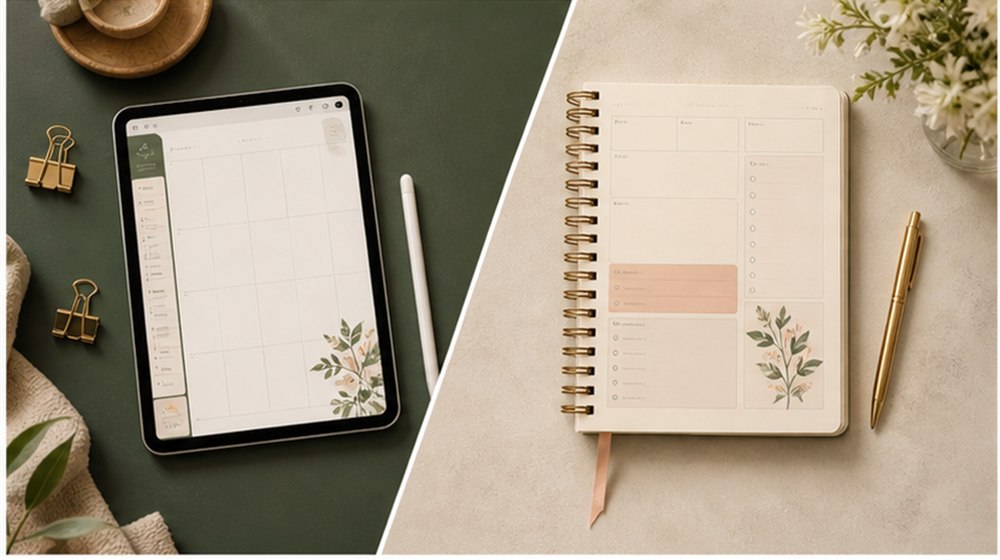 Digital Planner vs Paper Planner: Which One Fits You?